The Front Page Is Not a Complete Map
The front page is not a complete map: learn to read prominent placement as an editorial arrangement and choose a useful route to stories beyond it.
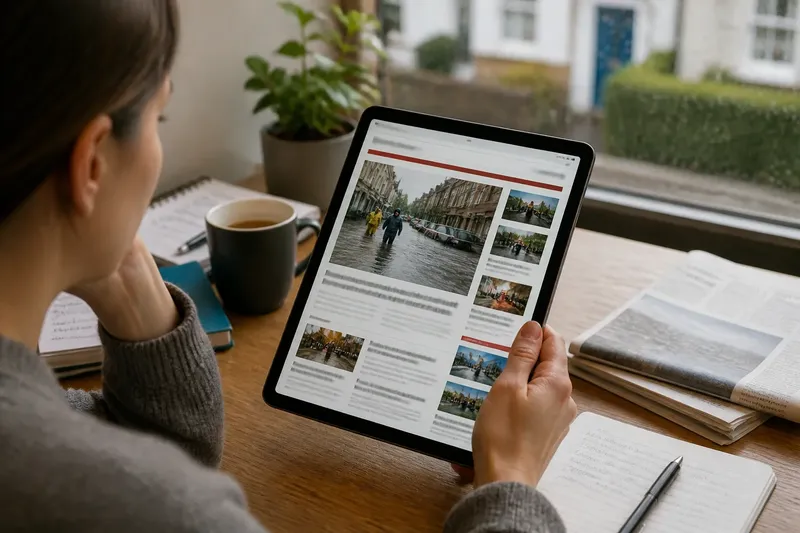
Which stories matter if the front page does not show them? A front page is not a complete map of the news; it is an editorial arrangement, shaped to draw attention and organise a selection. Reading it well means recognising what prominence can tell you, what it leaves out and when to look beyond the lead stories.
What position tells you
A story’s position is a clue to how an editor wants readers to encounter it. A lead story may be placed first because it has broad relevance, new information, strong public consequences or a clear connection to the day’s other coverage. A large photograph, headline or display panel can reinforce that choice.
But prominence does not work like a rating of every issue in order of importance. It reflects decisions made for a particular edition, page shape and intended audience. Some developments are still unfolding; others may be significant to a smaller community or difficult to explain in a short space.
Nor does a quiet position mean a story is trivial. A brief item lower down the page may point to a substantial change, while a visually dominant story may be prominent because it is immediately accessible or easy to present. Position is evidence about presentation, not a complete verdict on significance.
Three reading routes
You can treat the front page as a starting point, a selection to inspect, or a prompt to look across sections. Each route is useful for a different reading need. None turns one page into a full account of everything being covered.
The lead-first route
Begin with the main story and follow its links or references into related coverage. This suits a reader who wants to understand the issue the publication has chosen to foreground, including its background, latest developments and consequences.
The strength of this route is continuity: articles connected to the lead can make a complex subject easier to follow. Its limitation is that it may keep attention within one editorially prominent thread, leaving less space for issues that do not connect neatly to it.
The section-by-section route
Instead of stopping at the lead, scan the section labels and visit areas such as local news, business, culture, science or sport. This suits readers looking for breadth, especially when their interests do not match the subjects given the most space on the front page.
Section labels help you find a topic, but they do not make each section equally visible or complete. A story may appear under a different label than you expect, and a section page is still a selected arrangement rather than an inventory of every possible development.
The question-led route
Start with a subject or question you care about, then use the publication’s search, topic pages or related links to find coverage. This suits readers following a local decision, a public service, a policy change or another continuing concern that may not be prominent in the current edition.
This route can uncover stories separated across sections or published on different days. It also asks you to decide what terms to search and which results are relevant, so it works best when you have a clear topic rather than a general wish to see everything.
Choose a reading route
The right route depends on what you need from the visit. For a quick sense of the publication’s emphasis, start with the lead. For a broader scan, move through sections. For a particular concern, search by subject and follow the trail across coverage.
Say you want to understand a proposed change to a town’s bus services. The front page might lead with a national transport story, while the local report sits under a council or community section. Searching the town name alongside “bus services” could bring that report and related updates together; the observable result is a more relevant set of articles, not proof that you have found every account or perspective.
For a more balanced reading session, combine routes rather than asking one page to do every job. You might read the lead, scan section labels, then search for a topic with local importance to you. This is a choice about attention, not a demand to read every item.
- Choose lead-first when you want context around the issue the publication has placed most prominently.
- Choose section-by-section when you want to check what is being covered across different areas.
- Choose question-led search when you are following a defined subject that may be distributed across the site.
Why some stories sit elsewhere
Editors have limited space and must make material fit a page or screen. They consider factors such as freshness, relevance to readers, available reporting, clarity and the relationship between stories. These considerations can produce a front page that communicates a particular editorial judgement without representing every community’s priorities in equal measure.
Some stories need more explanation than a short front-page presentation can provide. Others concern a particular place, profession or group. They may be placed in a dedicated section, linked from a broader report, or published as a short update. That placement affects who is likely to see them, even when the story remains available elsewhere.
Digital pages add another layer: the order you see can depend on the edition, section, device or the way a page is refreshed. A prominent story may also remain in place while a less visible page carries newer material. If timing matters, check the publication time and the article itself rather than relying on position alone.
Questions about placement?
Does the lead story matter most?
It matters in the sense that editors have chosen to give it strong visibility in that edition. That choice does not establish that it is the most important story for every reader, place or purpose.
Can a smaller story be significant?
Yes. A short item or a story in a specialist section may have meaningful consequences for a particular community or service. Its size and location describe how it is presented, not the full extent of its effects.
How can I find coverage beyond the front page?
Use the section menu, search with a distinctive name or subject, and follow links to related reporting. If a topic is ongoing, look at dates and updates so you can distinguish a new development from earlier context.
Should I read every section?
Only if that suits your purpose and time. A targeted search or a scan of sections you care about can be more useful than trying to consume every item, and no single reading routine reveals everything a publication has chosen not to carry.
What not to chase
It is not worth treating the page as a puzzle in which every headline’s size must be decoded into a precise ranking. Visual decisions can reflect practical constraints as well as editorial judgement, and guessing at hidden motives from layout alone adds little. Focus instead on the distinction between what the page makes easy to notice and what you personally need to understand.
Reading the front page as an arrangement helps you use it without mistaking it for an index. If you want a quick account of editorial emphasis, follow the lead; if you want breadth, move across sections; if you need coverage of a specific concern, search for it directly. The front page is not a complete map, but it can be a useful signpost when you choose the next direction yourself.